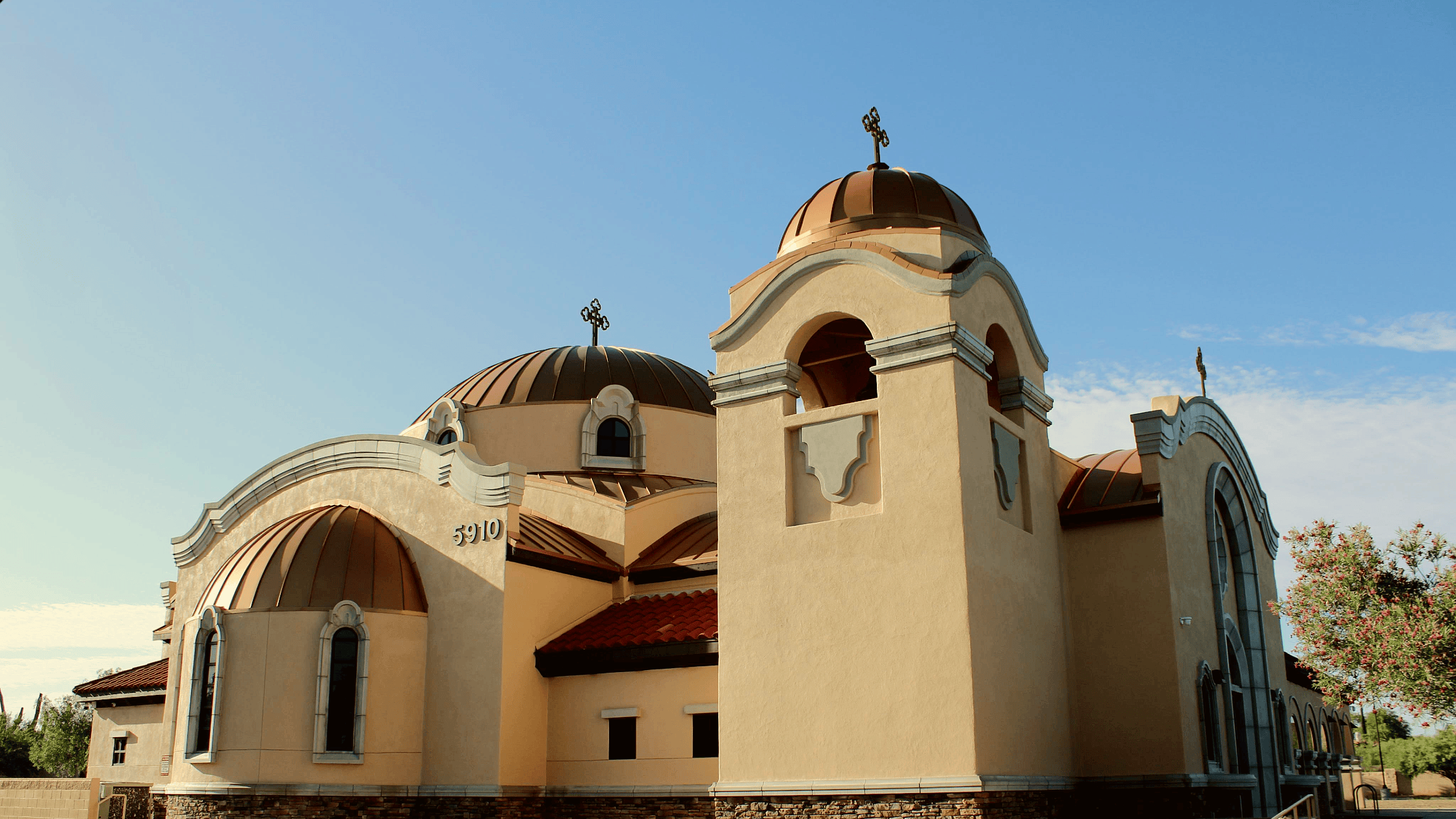
Background
background

Daily Reading

Yet one cannot understand the Orthodox Church merely by reading about it. Just as reading a biography about someone is no substitute for knowing the biography's subject personally, Orthodox Christianity must be experienced firsthand to be understood.

-Liturgical Day-

5TH MONDAY AFTER PASCHA

-Fast Information-

NO FAST

ACTS OF THE APOSTLES 12:12-17

In those days, Peter went to the house of Mary, the mother of John whose other name was Mark, where many were gathered together and were praying. And when he knocked at the door of the gateway, a maid named Rhoda came to answer. Recognizing Peter's voice, in her joy she did not open the gate but ran and told that Peter was standing at the gate. They said to her, "You are mad." But she insisted that it was so. They said, "It is his angel!" But Peter continued knocking; and when they opened, they saw him and were amazed. But motioning to them with his hand to be silent, he described to them how the Lord had brought him out of the prison. And he said, "Tell this to James and to the brethren." Then he departed and went to another place.
- Lives of Saints -

Holy Equals-to-the-Apostles Methodius (885) and Cyril (869), first teachers of the Slavs

The two saints were brothers, born in Thessalonica. St Methodius, the elder brother, served as a soldier for ten years before becoming a monk. Cyril was librarian at the Hagia Sophia in Constantinople; then he too became a monk.

Their first missionary work was not among the Slavs: When the king of the Khazars (a Mongol people who then inhabited much of what is now Russia) petitioned the Emperor Michael to sent teachers to instruct his people, the Emperor chose Cyril and Methodius as his emissaries. They converted the Khazar king to the Christian faith, along with many of his nobles and commoners.

When King Rostislav of Moravia likewise sought teachers of the Christian faith, Cyril and Methodius were again sent forth. This time they devised an alphabet for the Slavic language and used it to translate many of the Greek service books into the language of the people. (In theory, the Orthodox people have always been privileged to hear the Church’s services in their own tongue, though often attachment to dead languages has prevented this ideal from becoming reality.) Both brothers were repeatedly attacked by Germanic priests of the region, who opposed the use of the common tongue in the liturgy. At different times, both brothers were forced to appeal for exoneration and protection to the Pope of Rome, who supported them warmly each time.

After the two Saints reposed, attacks on their work continued, and their disciples were eventually driven from Moravia. The disciples, fleeing southward, found a warmer welcome among the southern Slavic peoples, and their work bore much fruit in Bulgaria (including modern-day Serbia) and other countries. And, of course, the alphabet that they devised, called Cyrillic after St Cyril, remains the standard alphabet of both the Slavonic service books of the Church and the Slavic languages of today.

Daily Reading by

Antiochian Archdiocese

Today's Saints by

Orthocal.info

Copyright © 2026 Holy Resurrection Orthodox Church. All rights reserved.
Made by Blessed Traditions